Physiotherapy At Blizard
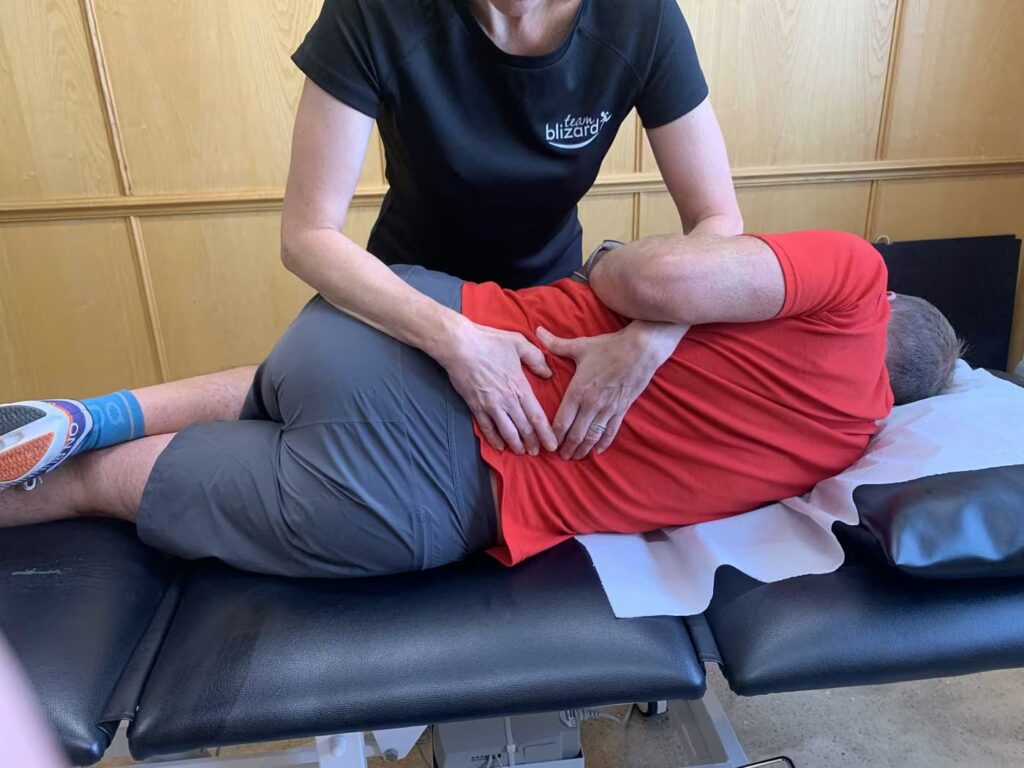
Physiotherapy is concerned with identifying and maximising quality of life and movement potential. At Blizard Physiotherapy through our training in the Maitland Concept of manual physiotherapy we do this with a thorough whole person assessment, lot’s of manual therapy “hand’s on” treatment combined with advice, education and a progressive exercise program.
Evidence based treatment is at the core of what we provide, and we are always keeping abreast of the research. We want you to be free of pain, full of movement and not stuck on pain killers. At the core of our approach to physiotherapy is a “full commitment to you” which is why we always start with an in-depth and very analytical assessment. You can learn more about the Maitland Concept of Manual Physiotherapy here (link button to new page discussing Maitland Concept).
Whilst as physiotherapist’s we treat a wide range of conditions such as back pain, neck pain, knee pain, shoulder for example, it is important to understand that here at Blizard Physiotherapy we treat the person NOT the diagnosis. As an example you may have been advised that you have knee osteoarthritis but for us we are just as interested in “what is the pain or loss of movement in your knee preventing you from doing?” And how can we help you do things better.
Physiotherapy Process
Book an appointment
Either online or pick up the phone and give us a call. We will send an email out with all the important information including where to park (FREE parking outside the clinic, it helps).
Form Completion
Completion of this online form starts the whole person assessment process. We NEED to know your lifestyle, your hobbies, your commitments and any medication you take. These are just as important as where the pain is. Pain is never an isolated problem, it is a whole person problem!
Your First Session (Assessment)
We deep dive into your problem and what your goal is in seeking help. This starts to form a hypothesis of what we consider is the source and cause of your problem (these are often very different). We then perform a range of assessments; often starting with you demonstrating the painful/restricted movement, strength testing, palpation (feeling your tissues). These act as “markers” for future sessions so we can see improvements. Your individual goal guides us in planning subsequent sessions too. We have a huge number of assessments we can perform but it is what we “drill down” from the structured and very specific questioning in the first part of the session that guides all future treatment and planning. It is the most important step.
Your First Session (Treatment And Planning)
Depending on the length of the session we will start with some manual therapy “hand’s on” treatment and advice. The manual therapy usually blends with the assessment as this provides us with initial clues on how your body will respond to treatment. We will then provide you with an initial diagnosis of the problem, and what we can do together to meet your goal and if we need help from other professionals such as your GP.
Subsequent Sessions
Each follow up session starts with an overview of how you have been in-between sessions (pain, function, rehabilitation completed) and re-assessments of specific tests. This ensures we keep on track with your goals and that the treatment plan is effective. We will also perform new assessments (new markers), for example you may have knee pain but we would also need to assess your ankle, hip and lower back too. Again the assessment blends with treatment. Treatment continues with hands on (possibly acupuncture too) always ensuring that your goals and the markers to achieve the goals are improving. The number of sessions required depends on the problem but an average follow up is 5 sessions over 12 weeks.
Final Session
In the final session we will discuss how far together we have met your goals, what needs to be done in the longer term to maintain your current situation, including any barriers that may get in the way and whether you need to continue with self directed exercises or the need for further intermittent sessions in the future. As stated in our core values….. we commit to you, we want to build a relationship that lasts for as long as you need it to.
After Care
Just because your physiotherapy sessions have stopped that doesn’t mean we stop caring. After your final session, your physiotherapist will check in on you usually at 4 weeks to ensure you are staying on track with your target and address any challenges that you are having. At 8 weeks our reception team will call you to check how you are progressing and whether you need any further assistance. In addition you are free to get in touch with your physiotherapist for any questions you may have. If this is a quick fix we help you over the phone or via email and if we feel you need more support we will offer another clinic appointment. We are always here for you and want you to be the best you can be and see your health as an investment.
Exercise Program
At Blizard Physiotherapy we understand the challenges of a busy life and how this may impact fitting in a home exercise. In your initial session we ask how much time you have to perform your exercises and this helps us plan how many physiotherapy sessions you need and how long it may take to work towards your goals so that we can work together at a pace that suits you. Not only that we know that having easy access to exercises in written and video format with a daily plan aids accountability and progress which is why we use www.physiapp.com dedicated to helping you reach your goal.
Conditions We Treat
Meet our Physiotherapy Team
Frequently Asked Questions
I would like to book an appointment, what happens next?
Once your appointment has been booked, you will be emailed a comprehensive questionnaire to complete which will help your physiotherapist plan the assessment. It is important that you provide as much detail as possible and complete as soon as possible so that your physiotherapist can ensure that the appointment is suitable for you. The questionnaire will ask you about what your GOAL is in seeking help.
The assessment process may comprise of any or all of the following:
– Functional demonstration by you of the movement/s you are having issues with
– Range of motion and strength testing
– Manual “hands on” assessment of joint/soft tissue range and mobility
After the assessment your physiotherapist may continue with treatment (depending on time available), this may comprise of:
– Manual “hands on” treatment
– Acupuncture (dependent on the physio chosen)
– Advice and education
– Home exercise program
Often the treatment provided blends with the assessment process to see how your body/tissues respond so that an appropriate discussion of the findings and what the potential plan forward might be.
Finally your physiotherapist will discuss with you the findings and plan further assessment/treatment and rehabilitation with you. If you require help from another professional, this will also be discussed with you.
Any rehabilitation program you are provided with will be issued via email with a link to an individualised exercise program including videos and detailed instructions and can also be viewed in a secure app. For further information about the app go to https://www.physiapp.com/.
How many sessions will i need?
It depends on the problem you are requiring help with!
Most clients require at least 3 hours of time with the physiotherapist to ensure that you have been assessed and treated completely or have an ongoing plan in place for an expected completion of your goal. This may take place over a few weeks or few months dependent on the nature of the issue you require help with.
Any subsequent niggles/injuries you have in the future often require less sessions because we have already got to know you and your body!
How quickly will it get better?
Again this depends! Some injuries have a recognised timeframe for recovery which could be a couple of weeks to several months. The length of time you have had the problem for without seeking help can prolong your recovery so it is often best to seek help soon. Some injuries also get better quicker with regular treatment sessions and again some injuries won’t get better with more regular treatment sessions. This is why it is important to have an assessment. Finally you are the most important factor in whether an injury exceeds or beats normal expected recovery timescales depending on how well you positively engage in your program by looking after yourself and how frequently you can commit to a home rehabilitation program.
How long should I book for my initial assessment appointment?
It is advised to book an hour initial appointment if:
– You have more than one area of pain
– If you feel that your issue may be complex
– You have had your problem for longer than 3 months
– You are travelling a long distance to access help from us
Why should I have private physiotherapy when I can see an NHS physiotherapist?
This is a really good question that is a challenge to answer briefly! In essence the physiotherapy you receive via the NHS should be the same as that provided by private physiotherapists. In practice though this is very different. All our physiotherapists started working life in the NHS so we have a very good grasp of both sectors.
The challenge with the NHS is that despite having excellent physiotherapists (we know as we have been one of them!) the NHS is under a huge strain financially and time wise. NHS physiotherapy is of course free but you will need to book an appointment with your GP that could take a couple of weeks, then you will be placed on a waitlist to see a physiotherapist which could be another 6 weeks (this fluctuates). If you are in pain, if you are worried, or if the problem is stopping you from doing the things you want or need to be doing e.g., work, then those 6 weeks can feel like a long time. Once booked with the physiotherapist they have time constraints on length, number and frequency of appointment’s. Given these factors the physiotherapist has to make decisions about what type of treatment may be best and this is usually a home exercise program. In contrast private physiotherapists have no time constraints on appointment lengths, frequency and overall number of appointments but it is not free. You can book in for the next available appointment which is usually a couple of days and you do not need to see your GP first. You can also attend physiotherapy at a time that may be more suitable for you such as early morning or late evening. We can also provide more “hands on” based treatments and increased frequency of treatment initially, alongside a home exercise program which speeds up recovery and provides a higher level of client satisfaction. You can also enjoy free out of city parking!
We often have clients who commence private physiotherapy whilst waiting for an NHS appointment and that is fine by us.
What should I wear?
We would recommend that for a neck, shoulder issue wear a sports bra or vest for females. For a lower back and leg issue we would recommend that you wear shorts/leggings where possible. We do have toilets where you can get changed before your session or you can wear your shorts/leggings under your normal clothing and remove them in the session.
I have booked a female pelvic health appointment. What should I expect?
You can read all about what to expect in a female pelvic health appointment here.
I have booked a lactate test appointment, what should I expect?
You can read all about what to expect in a lactate test appointment here.
How much will it cost?
You can read about our pricing here.
Where do I park?
The good news is that we have FREE parking directly outside our clinic. In order to maintain good relationships with residents and other businesses we would appreciate your courtesy in parking ONLY either directly outside the clinic or on any of the central reservations (there are plenty!).
I have a health insurance scheme, can I claim?
Absolutely. For cash back schemes we provide a receipt which includes your Physiotherapist’s HCPC number which you will need for your claim to send to your health insurance company. Depending on your individual policy, you may be able to reclaim some or all of your fees. Please understand that policies and cover varies widely now and Blizard Physiotherapy are unable to accept any responsibility for the amount you may be able to reclaim from your insurance company. You will be responsible for any shortfall.
Do I need to see my GP first?
No (unless it is specified by your health insurance company) which means you can book as soon as possible without any delays giving you direct control and a speedier recovery.
Professional Standards, Ethics and Safety
Our Chartered Physiotherapists are registered with the Health and Care Professions Council (www.hpc-uk.org) and are members of the Chartered Society of Physiotherapy (www.csp.org.uk) which ensures we adhere to strict professional codes of conduct.